For sixteen nights in October the river under Jinju’s fortress fills with lanterns, thousands of them, floating and hanging and standing in the water, and the whole thing is free to walk into.
The catch is not money. It is that Jinju is three and a half hours from Seoul and the lanterns only come on at 18:00. A day trip is possible and tight. This page is the timetable for doing it, from the operators’ own pages.
The dates and the hours
The Jinju Namgang Yudeung Festival runs 3 to 18 October 2026, along the Namgang River and inside 진주성 (Jinjuseong, the Jinju fortress). 유등 (yudeung) means a floating lantern, and the custom goes back to the siege of the fortress in 1592, when lanterns on the river carried signals and, later, wishes.
Lanterns are lit from 18:00 to midnight. The floating bridges across the river and the stalls run from 13:00 to 23:00. The best of it is between 20:00 and 22:00, when everything is lit and the crowds are at their thickest.
Two dates decide the crowds. Saturday 3 October, opening day, is National Foundation Day, a public holiday. Friday 9 October is Hangul Day, another one, which makes the second weekend a three-day one. If you can go on a weeknight, go on a weeknight.
What is free and what is not
Looking is free. In 2025 the festival charged no admission, the tourism board lists it as free, and the city’s July announcement of the 2026 dates said nothing about charging.
The paid parts are the things you do rather than see: crossing the floating bridges strung across the river, hanging a wish lantern with your own message on it, and floating a lantern of your own. The 2026 price list was not on the festival site when this was checked, so read the signs at the booths.
Three fireworks nights and three drone shows are planned, with more than 950 drones. The festival’s own programme page still said the schedule was being prepared, so check it before you pick a night for that reason.
Getting there from Seoul
By train. KTX from Seoul Station to Jinju takes about three and a half hours and costs 52,700 won in economy on Korail’s site, 76,400 in first class. The catch is frequency: the direct trains are few, and on a Thursday afternoon in September there were three KTX departures and one slow ITX-Saemaeul, which takes five hours twenty. On the holiday morning of 3 October the early trains out of Jinju were already sold out two weeks ahead. Booking KTX as a foreigner covers the site and the app.
By bus. The express bus from Seoul Express Bus Terminal to Jinju runs 43 times a day, takes three hours 49 minutes, and costs 34,500 won for a standard seat or 41,200 for premium. The first bus is at 00:10 and the last at 23:20. Kobus has taken foreign cards since August, which the intercity bus guide explains.
The bus wins on price and on flexibility. The train wins on comfort and on Seoul Station being easier to reach than Banpo.
From the station to the river
Jinju Station is not in the middle of town. The fortress is about seven kilometres away. Bus 131 does it in around 35 minutes, and a card ride in Jinju is 1,650 won, 1,700 in cash, with one free transfer inside 30 minutes. A taxi is quicker and Kakao T works in Jinju as it does everywhere.
The two bus terminals are closer. The intercity terminal sits beside the river on the north bank, near the fortress, and the express terminal is across the river in Chilam-dong on the south bank, which is the side with the best view of the lanterns anyway.
Your Seoul T-money card works on all of it. The outside-Seoul transport guide has the pattern.
The fortress after six
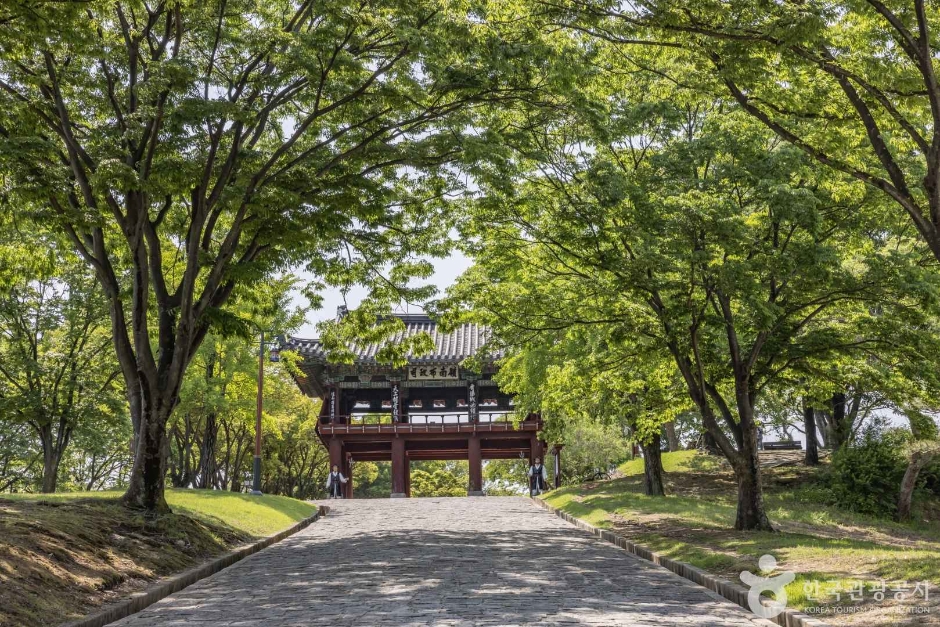
Jinjuseong charges 2,000 won for adults, 1,000 for teenagers and 600 for children, but only between 09:00 and 18:00. The gates stay open until 23:00 from March to October. So the lantern hours fall entirely in the free window, and the walk along the walls above the river is the best seat in the house.
Inside are 촉석루 (Chokseongnu), the pavilion on the cliff over the river, and the National Museum. Go in during the afternoon if you want the museum; go in after six if you only want the view.
Making it a night, or two
The honest shape of the trip is one night in Jinju. Arrive mid-afternoon, walk the fortress in daylight, eat, and come back down to the river at eight. Leave the next morning, or carry on: Busan is the natural next stop by intercity bus, and the Busan two-day guide starts from there.
If you are in the country before 4 October, the Andong mask dance festival runs 24 September to 4 October in the same province next door, and the festival calendar puts both in the autumn run.
Whatever else the festival adds this year lands on its event page as the tourism board updates it.
The 2026 dates, the lantern hours and the bridge and stall hours are from the festival’s own website, read 17 September 2026, whose programme page still said the schedule was in preparation. The free admission is from the Korea Tourism Organization’s English listing, which notes it is based on 2025, and from the city tourism site’s 2025 page; the three fireworks nights, three drone shows and 950 drones from the city’s announcement of 30 July 2026. KTX fares, journey times, the September departures and the 3 October return timetable are from Korail’s English booking site, searched 17 September 2026. Express bus frequencies, times and fares are from the public timetable data for Seoul Express Bus Terminal to Jinju as published on 10 September 2026. Jinju bus fares and the transfer rule are from the city’s bus information system; the route from Jinju Station to the fortress is Kakao Map’s suggestion on 17 September. Fortress fees and hours are from the city’s Jinjuseong page, and the two terminals’ locations from the Digital Jinju Cultural Encyclopedia. Prices for the floating bridges and lanterns are not given because the 2026 list was not published.