You can book a KTX seat from your sofa at home with a passport number and a foreign card, on Korail’s English site, without joining anything. Whether the payment goes through is another matter, and that is what this page is about.
First the good news from this week. On 1 September 2026 Korea’s two high-speed operators became one. SRT is gone, its trains now say KTX-Sancheon, Suseo in south-east Seoul is a KTX station, and the ministry announced an average 10% fare cut with it: Seoul to Busan fell from 59,800 to 54,400 won in standard class, Yongsan to Gwangju-Songjeong from 46,800 to 42,000. The subway guide covers what that changed at the stations.
The four ways to hold a ticket
Korail’s English site. korail.com swallowed the old Let’s Korail site in February 2025. Switch it to English, search the train, and book as a non-member: name as on your passport, passport number, email. No Korean phone number, no membership. At payment, pick the option for a card issued overseas.
Then the wall. That payment step hands you to your bank for 3D Secure, exactly as the foreign card guide describes, and it fails for the usual reasons: the card is not enrolled, or the name you typed does not match the name printed on the card. Korail gives no useful error when it happens. Fix the enrolment with your bank before you try, type the name exactly as embossed, and have a second card.
The KORAIL+ app. The app that used to be KorailTalk runs in English and does everything the site does, with one reported difference: its payment goes through a domestic gateway that visitors say rejects foreign cards more often than the website. Use it to check times and hold a booking; pay on the site or at the station.
The station. Every KTX station has counters that take cash and cards, and machines with an English option. This is the fallback that always works, and outside holidays and Friday evenings the train you want usually still has seats an hour before it leaves. When a train is sold out, Korail sells standing tickets on it, listed on the English site alongside reserved seats.
A reseller. Klook sells fixed-route KTX tickets, Seoul to Busan, Gangneung, Daegu, Jeonju or Gyeongju, paid with your own card on a site built for foreign cards, and issues you the ticket. It costs a little more than the counter and removes the 3D Secure lottery entirely. The links below are those tickets.
When sales open, and what cancelling costs
Korail opens sales about a month before departure, and for the Chuseok holiday it runs a separate advance-booking window: for 2026 the public one is 7 to 11 September. Popular Friday and Sunday evening trains on the Busan line sell out; a Tuesday midday train does not.
Cancellation is no longer nearly free. The ministry, Korail and SR set a new schedule from 28 May 2025 because people were block-booking peak seats and dumping them at the last minute:
| Cancel | Fee, weekends and holidays |
|---|---|
| Up to 2 days before | 400 won |
| The day before | 5% |
| Until 3 hours before departure | 10% |
| Inside 3 hours | 20% |
| Up to 20 minutes after departure | 30% |
On weekdays it is free until three hours before departure. On Seoul to Busan the last-three-hours fee is about 12,000 won, double what it was.
And do not board hoping to sort it out on the train. Since 1 October 2025 riding without a valid ticket costs twice the fare.
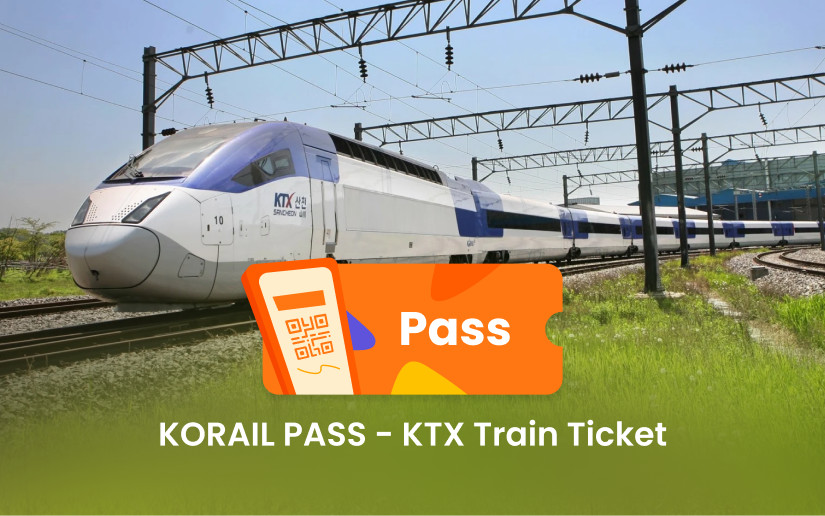
The KORAIL PASS, and who it is for
The pass is a foreigners-only product: a passport from outside Korea and less than six months in the country. It comes as consecutive-day passes and flexible-day passes over a longer window, with cheaper youth and child versions and a saver rate for groups of two to five travelling together. Klook lists it at about 96 US dollars in the catalogue below.
Two things trip people up. A pass is not a ticket: you still reserve a seat for each train, on the English site with the pass number and your passport, and the popular trains run out of pass seats too. And it only pays if you ride a lot. One Seoul–Busan round trip is now about 109,000 won, so a three-day pass has to carry two long trips in three days before it beats buying tickets. Seoul, Busan, Gyeongju and back inside a long weekend, yes. One trip to the coast and back, no.
On the day
Seats are reserved and numbered; there are no gates, only a conductor who may check the ticket on your phone. Standard class is fine for two hours. Cars have luggage racks at the ends and space above the seats for a cabin bag, which is where the locker guide becomes useful at the far end.
Seoul Station, Yongsan and now Suseo are the Seoul departure points, and which one depends on the line, so read the station on the ticket, not the city. The airport train runs straight into Seoul Station, which makes a KTX onward the same day an easy connection.