Korea does not have a festival season. It has four of them, back to back, and the only genuinely quiet stretch is a few weeks in midsummer and midwinter between waves.
If you can pick freely: May or October. If you cannot, here is what each month actually holds. Dates come from Korea Tourism Organization and Seoul city listings, or from the festival’s official site where noted, checked 3 Sep–1 Oct 2026. The live events calendar on this site carries whatever is on during your trip, updated daily.
Winter: ice and lanterns
January. The famous one is 화천산천어축제 (Hwacheon Sancheoneo, “mountain trout” ice festival): thousands of people ice-fishing through drilled holes in a frozen river in Gangwon. The next edition is listed for 9 to 31 January 2027. Seoul’s lantern festival, which starts in December, runs into mid-January.
February. Seollal, the Lunar New Year, usually lands here — in 2026 it fell in mid-February, and Seoul filled the holiday with traditional-games festivals at the Hangang and Namsangol Hanok Village. Palaces run holiday programmes; many shops close for the core days, the same pattern as Chuseok.
March is the hinge. Ski slopes are closing, and at the southern tip the blossom starts: the Jinhae naval port festival opened 27 March in 2026. The cherry blossom guide has the whole moving line.
Spring: the first big wave
April belongs to the blossom — Yeouido and Seokchon Lake in Seoul both ran their festivals in the first half of April 2026 — and to spring flower events in nearly every district. This is the most crowded festival month of the first half.
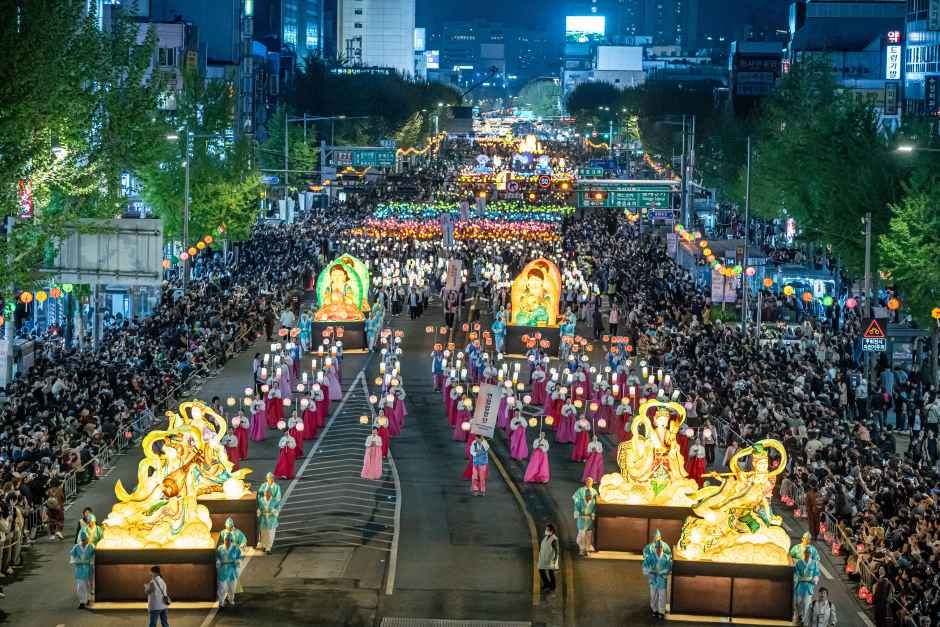
May is the richest month of them all. In 2026: 담양대나무축제 (Damyang Bamboo Festival, 1–5 May) in the bamboo forests of the southwest, 문경찻사발축제 (Mungyeong tea bowl festival, 1–10 May), Hadong’s wild tea festival, and in Seoul the one to plan around: 연등회 (Yeon Deung Hoe, the Lotus Lantern Festival), a night parade of glowing paper lanterns for Buddha’s birthday, held 16–17 May in 2026. It is on the UNESCO intangible heritage list and it is free.
June is quieter — a Dano (단오, the fifth-moon seasonal holiday) festival at Namsangol on 13 June was Seoul’s main traditional date in 2026. Consider it the pause before summer, and a good month for baseball instead.
Summer: water, mud and beer
July opens with 대구치맥페스티벌 (Daegu Chimac Festival, 1–5 July 2026) — chicken and beer, in industrial quantities — and closes with the one foreigners know best: 보령머드축제 (Boryeong Mud Festival), which ran 24 July to 9 August in 2026 on Daecheon Beach. Wrestling pits, mud slides, fireworks.
August keeps the mud festival’s second week, adds the Seoul Fringe Festival (6–23 August 2026, Seoul’s independent performing-arts sprawl), and the Hangang parks run summer programmes through the month. Expect heat around 30 degrees and plan festivals for the evening.
Autumn: the second big wave
September starts gently — Muju’s firefly festival (4–12 September 2026) and the buckwheat-flower Hyoseok festival in Pyeongchang (4–13 September) — then hits Chuseok, which fell on 24–27 September in 2026 and reshapes the whole country for a week: what stays open is its own guide. The 안동국제탈춤페스티벌 (Andong Maskdance Festival) bridged the holiday, 24 September to 4 October 2026. In Gwangju, 광주비엔날레 (Gwangju Biennale, 5 September–15 November 2026, official site) opened at the start of the month and runs well into November.
October is May’s mirror. In the first week of October 2026 alone: Gimje’s Horizon harvest festival, Cheonan’s dance festival, Jeongseon’s Arirang festival — and the most beautiful of the year, 진주남강유등축제 (Jinju Namgang Yudeung Festival, 3–18 October 2026), which floats thousands of glowing lanterns down the Nam River. The second weekend brings 자라섬재즈페스티벌 (Jarasum Jazz Festival, 9–11 October 2026, official site) to Jarasum island in Gapyeong. Book beds early: this is also foliage season and the KBO postseason.
November winds down south: Jeju’s Olle walking festival (5–7 November 2026), apple and food festivals in the southeast, Pohang’s international fireworks on 20 November 2026, and by late month the ski resorts open.
December hands back to the lights. Last winter Seoul’s lantern festival ran 12 December to 18 January around Gwanghwamun, with a Christmas market week on the Hangang. Cold, but this is the prettiest the city gets.
Dates shift every year and festivals occasionally cancel. Every date above is the 2026 listing or official site, checked 3 Sep–1 Oct 2026. For the weeks you are actually here, the events calendar has the current listings with a “this weekend” filter, and each event page links the official site.