Gyeongju was the capital of the Silla kingdom for a thousand years, and the city still wears it: burial mounds rise between apartment blocks, a 7th-century observatory stands in a field, and a UNESCO temple sits up the mountain. Guidebooks call it a museum without walls, which is accurate and slightly misleading — most visitors treat it as a checklist and leave at five.
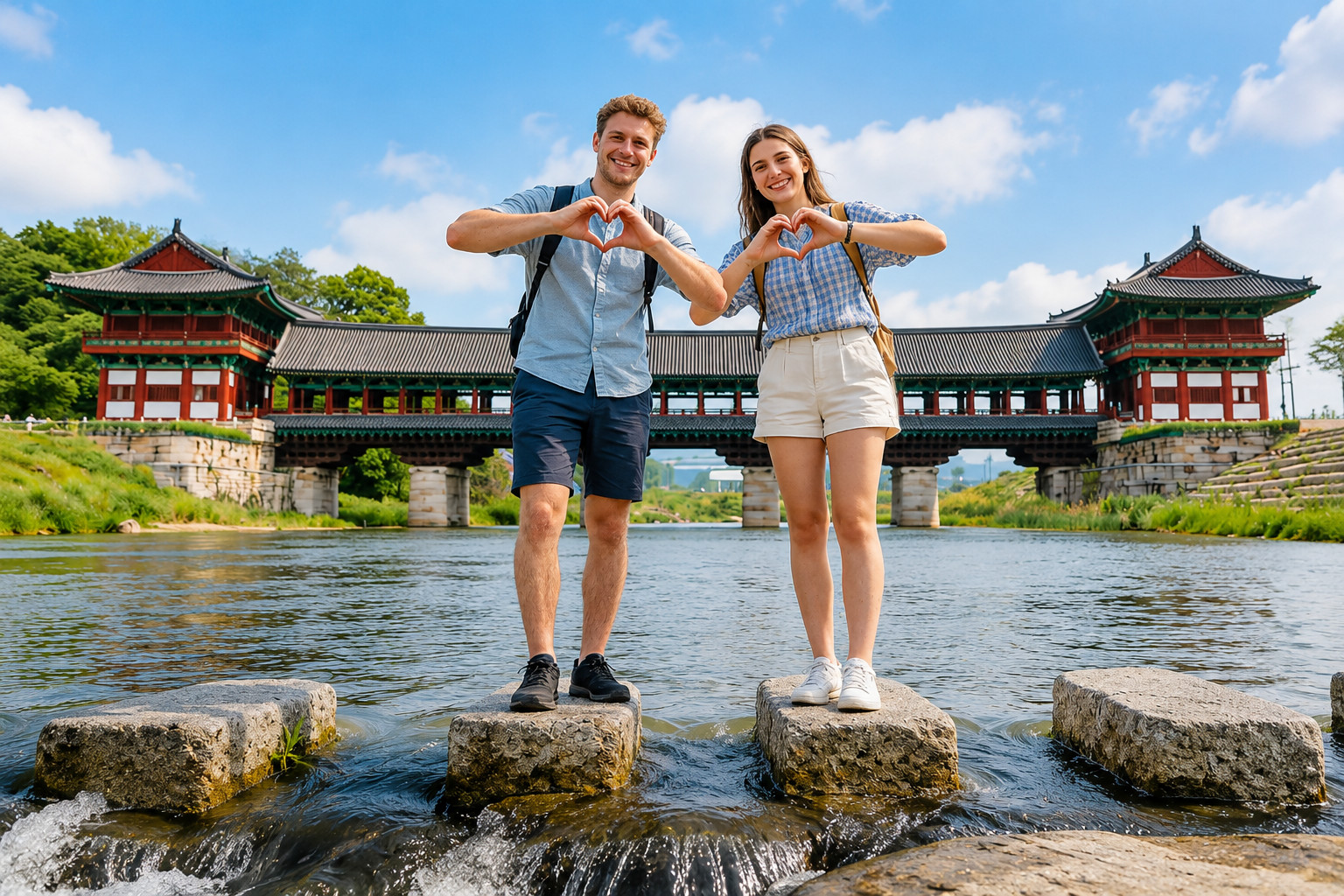
That is the mistake worth fixing. Gyeongju’s headline sites stay open to 22:00, and the city spent its APEC summit preparation lighting them. Korea hosted the 2025 APEC leaders’ meeting here, and the night-time programme built for it — light and projection across Daereungwon, Cheomseongdae, Donggung Palace and Wolji Pond, Woljeonggyo Bridge and Bomun Lake — outlasted the summit. Foreign arrivals bear it out: 569,357 in January to May 2026, up 18.3 percent on the same months a year earlier.
Getting there
Singyeongju station is about two to two and a half hours from Seoul by KTX, and the September 2026 Korail-SR merger cut fares roughly ten percent network-wide. The catalogue sells a Seoul–Gyeongju KTX ticket at about USD 36 if you would rather not deal with the booking site.
From Busan it is under an hour, which is why the tour market lives there: guided Gyeongju day trips from Busan run about USD 32 to 65, and a UNESCO-focused full-day version sits near USD 51. If Busan is already on your itinerary, pairing the two is the efficient shape.
Daylight: the UNESCO three
불국사 (Bulguksa) is the Silla dynasty’s great Buddhist monument, its founding traced to the reign of King Beopheung (514–540). Open 09:00–18:00.
석굴암 (Seokguram), the grotto with its seated Buddha, was built under King Gyeongdeok (742–765) by Kim Dae-seong — the same patron as Bulguksa. It shares the UNESCO listing but not the location: three kilometres up a hiking trail from Bulguksa, or nine by road. Plan the transfer; this catches people out.
양동마을 (Yangdong Village), north of the city, is Korea’s largest traditional village and a UNESCO entry in its own right — Joseon-era houses still lived in. 09:00–19:00 April to September, closing an hour earlier in winter.
The centre, and then the night
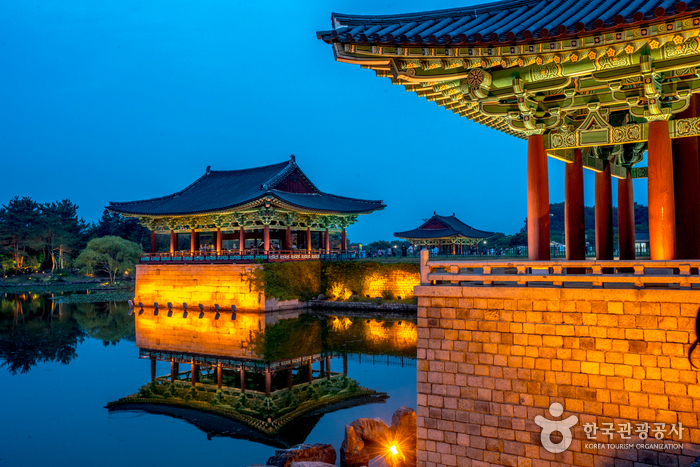
The old city is walkable and flat. 대릉원 (Daereungwon) is a park of 23 royal tomb mounds with paths between them, including Cheonmachong, which you can enter. 첨성대 (Cheomseongdae), the cylindrical stone observatory from Queen Seondeok’s reign (632–647), stands in the open a few minutes away. Donggung Palace and Wolji Pond (동궁과 월지, Donggung-gwa Wolji) is the Silla crown prince’s secondary palace, its pavilions set at the water’s edge — the cover photograph on this page, and the single best argument for staying late.
Their closing times are the tell: Daereungwon and Cheomseongdae to 22:00 in summer (21:00 in winter for the observatory), Donggung and Wolji to 22:00 with last admission at 21:30. Heritage sites do not normally keep those hours. Between them, 황리단길 (Hwangnidan-gil) — the café and shop street named after Seoul’s Gyeongnidan — feeds you in the gap between the day sites closing and the night ones glowing.
When to come
Autumn is Gyeongju’s season — foliage over the tomb mounds, evenings mild enough to walk, and a dedicated autumn foliage day tour appearing in the catalogue when it starts. Spring brings cherry blossom around Bomun Lake, on the same schedule as the rest of the country’s bloom line. Summer is hot and the sites are short on shade.
The wider region rewards the trip too: the Andong mask dance festival runs 24 September to 4 October this year, and Gyeongbuk’s autumn calendar keeps going with ginseng, apple and fireworks festivals into November. Whatever is running while you are there is on the live Gyeongbuk calendar.
Site descriptions, founding dates and opening hours are from the Korea Tourism Organization’s official listings; the APEC night-lighting programme and the January–May 2026 visitor figures from Korean press coverage; travel times and tour prices from operator listings and the Klook catalogue. Checked 7 September 2026. Night opening hours shift between summer and winter — the site pages are the last word before a late visit.