Tapping your phone works in Korea more often than the headlines suggest. When it fails, it is almost never your card.
The story that gets reported is a Korean one: Apple Pay launched here and, three and a half years on, Apple’s own list of supporting Korean issuers still has a single name on it, Hyundai Card. That is a genuine problem, and it belongs to people who live here and hold Korean cards.
You are not that person. You arrived with a card already sitting in your Wallet, and Apple Pay in Korea takes American Express, Mastercard and Visa. Your side of this is solved before you land.
The actual constraint is the terminal
Korea’s contactless reader coverage is the thin part.
EMV contactless terminals, the standard the rest of the world taps against, sit at about 10 percent in Korea. The global figure is 74 percent, and Singapore, Australia and the United Kingdom are all above 90 percent. The Korean technology press has taken to calling the result a payment Galápagos, which is a fair description of a country where the card infrastructure is excellent and simply grew along a different branch.
The reason is historical rather than technical. Korea went early and hard on its own card rails, then on QR codes and phone-based payment schemes of its own, and the joint push to put contactless readers everywhere never gathered the same momentum. Nothing about it is a judgement on your bank.
Where tapping is reliable
Two places have been fixed deliberately and are worth knowing.
Korail has finished installing contactless readers across its stations nationwide, and T-money has brought them to Seoul city buses. Transport, the thing you use most often and want least friction on, is the part that has been solved.
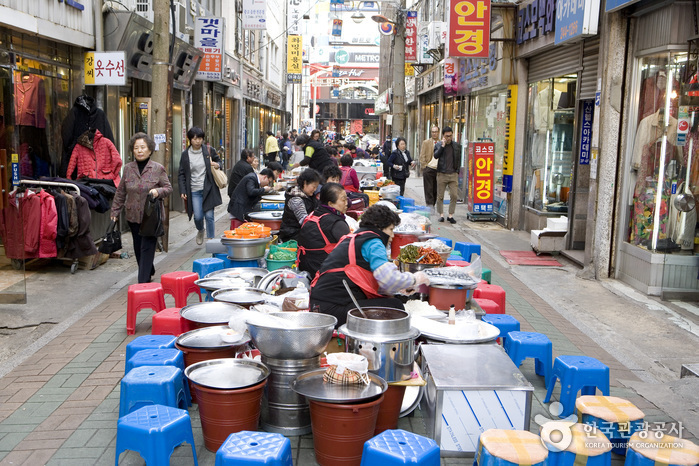
Beyond that, the large chains and convenience stores are where a reader is most likely to exist. The further you get from a chain logo, the less likely it becomes: a market stall, a small independent restaurant, an older till in a family shop. Those are not edge cases in Korea, they are a good part of the best eating in the country.
The wallets you cannot use
Worth saying plainly so you stop looking for them. Kakao Pay, Naver Pay and the Korean QR schemes all sit on a Korean bank account held in a verified name, and opening one needs a residence card. The app-by-app guide sets out what a visitor can and cannot reach, and this is firmly in the second column.
So the mobile payment story in Korea splits in two. The domestic wallets are shut to you and always have been. The international one in your pocket works fine, wherever the hardware exists to hear it.
What to carry
Reverse the habit you arrived with. The physical card is the default and the phone is the convenience, rather than the other way round.
That single change removes nearly all the friction, because the card works in the terminals the phone cannot reach. The card guide covers why a foreign card sails through in shops while Korean websites reject it, which is the opposite problem and a more common one.
Add a T-money card for transit and you have covered the rest. Our transport guide also covers the Mobile T-money option that puts a transit card in an iPhone Wallet, which since March 2026 has had a setting built for foreign visitors.
And keep a little cash for the market stalls. Not much: the daily budget guide shows how small that share really is, and the ATM guide covers getting it without paying for the privilege twice.
The count of Korean Apple Pay issuers is from Apple’s own published list of supporting card issuers for Korea, read on 14 September 2026, which names Hyundai Card alone and states that American Express, Mastercard and Visa cards can be added. The terminal figures, about 10 percent in Korea against 74 percent worldwide and over 90 percent in Singapore, Australia and the United Kingdom, along with the completed Korail station rollout and T-money’s Seoul bus readers, are from Korean technology press coverage of the contactless market published on 29 July 2025. Which specific chains have readers changes as machines are replaced, so treat the pattern as durable and any individual shop as worth a glance at the terminal before you raise your phone.