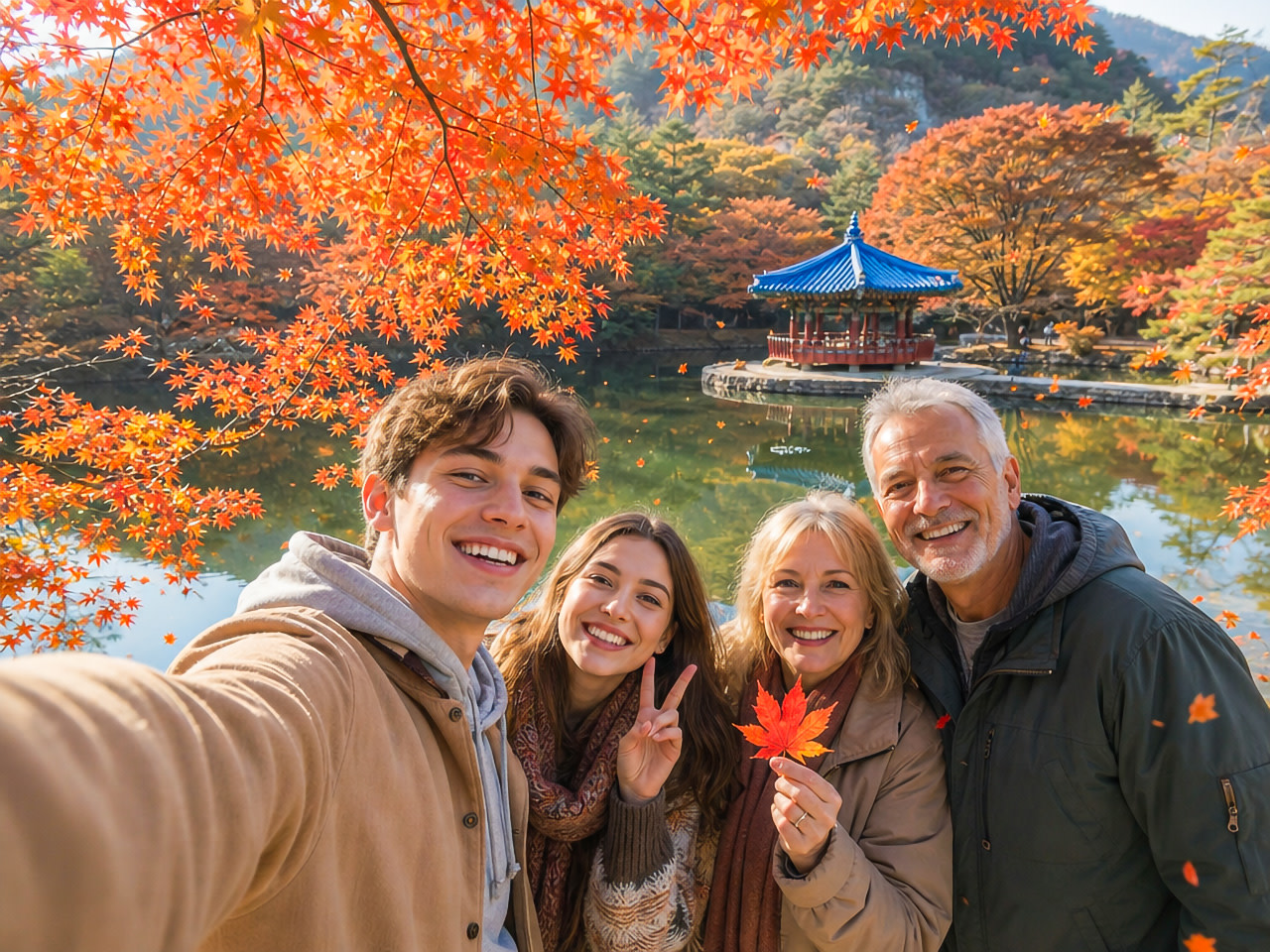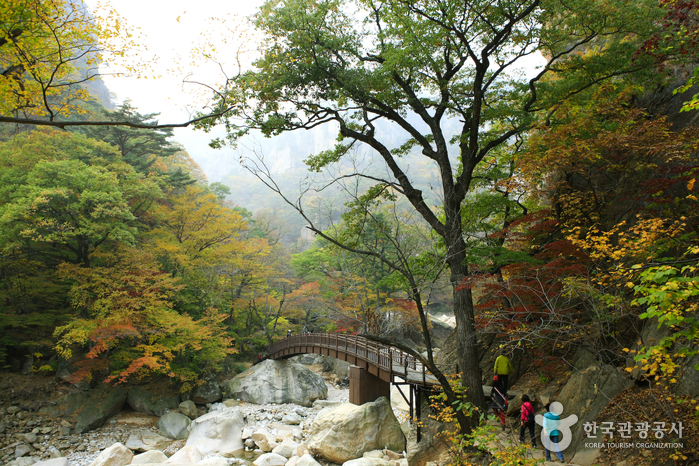
Most people plan a Korean autumn around a single date. There isn’t one.
Colour starts in the northern mountains around the end of September and takes about six weeks to reach the southern lowlands. Seoul sits near the end of that sequence, not the middle. Arriving in mid-October expecting a red city is the common mistake.
The order it happens in
Two rules decide everything: north turns before south, and mountains turn before cities at the same latitude.
| Where | Usual peak |
|---|---|
| Seoraksan, Odaesan (northern mountains) | 20–30 October |
| Seoul, Gapyeong, central regions | late October to mid-November |
| Naejangsan, Jirisan, Busan (south) | early to mid-November |
Seoraksan is reliably first because it is both northern and high. Naejangsan is reliably last because it is southern and low.
These dates move. A hot dry summer pushes colour later and makes it duller; a cool wet September brings it earlier and sharper. The Korea Meteorological Administration publishes a forecast each September — as of late August 2026 it was not yet out, so treat the table above as the pattern, not this year’s promise, and check again in September.
If you are only in Seoul
You do not need to leave the city. The colour is genuinely good, it simply arrives later than people expect.
Palace grounds. Gyeongbokgung and the rear garden at Changdeokgung are the obvious ones, and the garden is the better of the two for autumn specifically. Remember Gyeongbokgung closes Tuesdays and Changdeokgung Mondays.
덕수궁 (Deoksugung) stone wall road. The walk along the palace wall is the single most photographed autumn street in Seoul, and it is free — you are outside the palace, not in it.
서울숲 (Seoul Forest) in Seongsu, and 남산 (Namsan) on the way up to the tower. Both are full parks rather than single streets, so they hold colour longer.
정독도서관 (Jeongdok Library) and the lanes from 삼청동 (Samcheong-dong) up to Bukchon are the quiet option, and noticeably less crowded than everywhere above.
Ginkgo trees turn yellow slightly before maples turn red, so the city has two overlapping waves rather than one.
If you are going to the mountains
Seoraksan in late October is the most beautiful and the most crowded thing in the country that month. Two practical points.
Book accommodation early. Rooms near Seoraksan and Naejangsan sell out weeks ahead for peak weekends, and prices roughly double.
Go midweek if you possibly can. The peak Saturday is genuinely difficult — car parks full by early morning, queues for the cable car, and roads that turn a three-hour drive into six.
If your dates are fixed and they fall on a peak weekend, Seoul’s own parks on the Sunday will be a better day than Seoraksan’s car park.
What to wear
Late October in Seoul runs roughly 8 to 18°C, and November drops sharply. Mornings and evenings are much colder than afternoons, and the mountains are colder again than the city.
Layers, and a jacket you can carry when the afternoon warms up.
The short version: if autumn is why you are coming, aim for the first week of November in Seoul, or the last week of October if you are heading for the mountains. And check the forecast in September, because the whole thing shifts by a week either way depending on the summer.