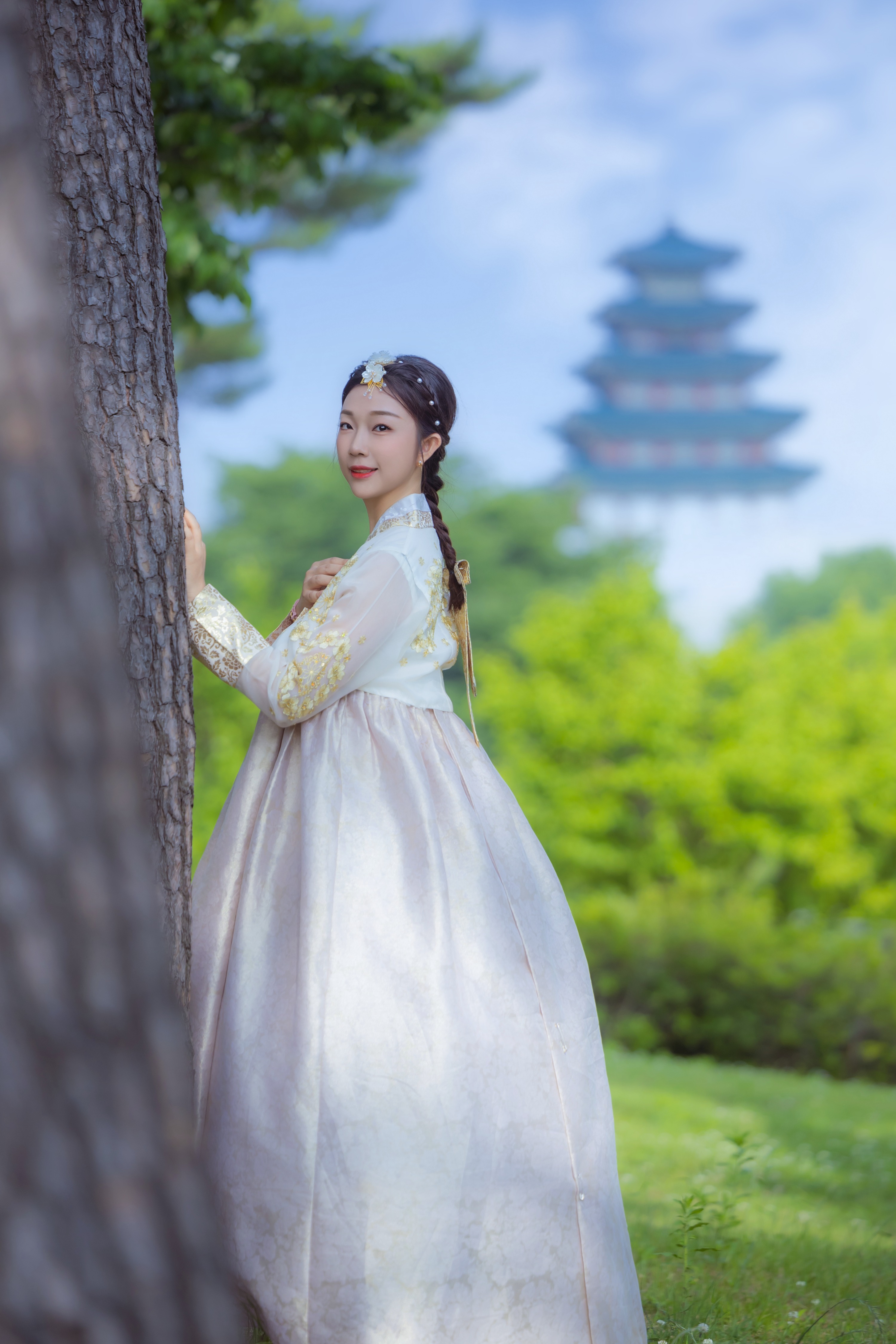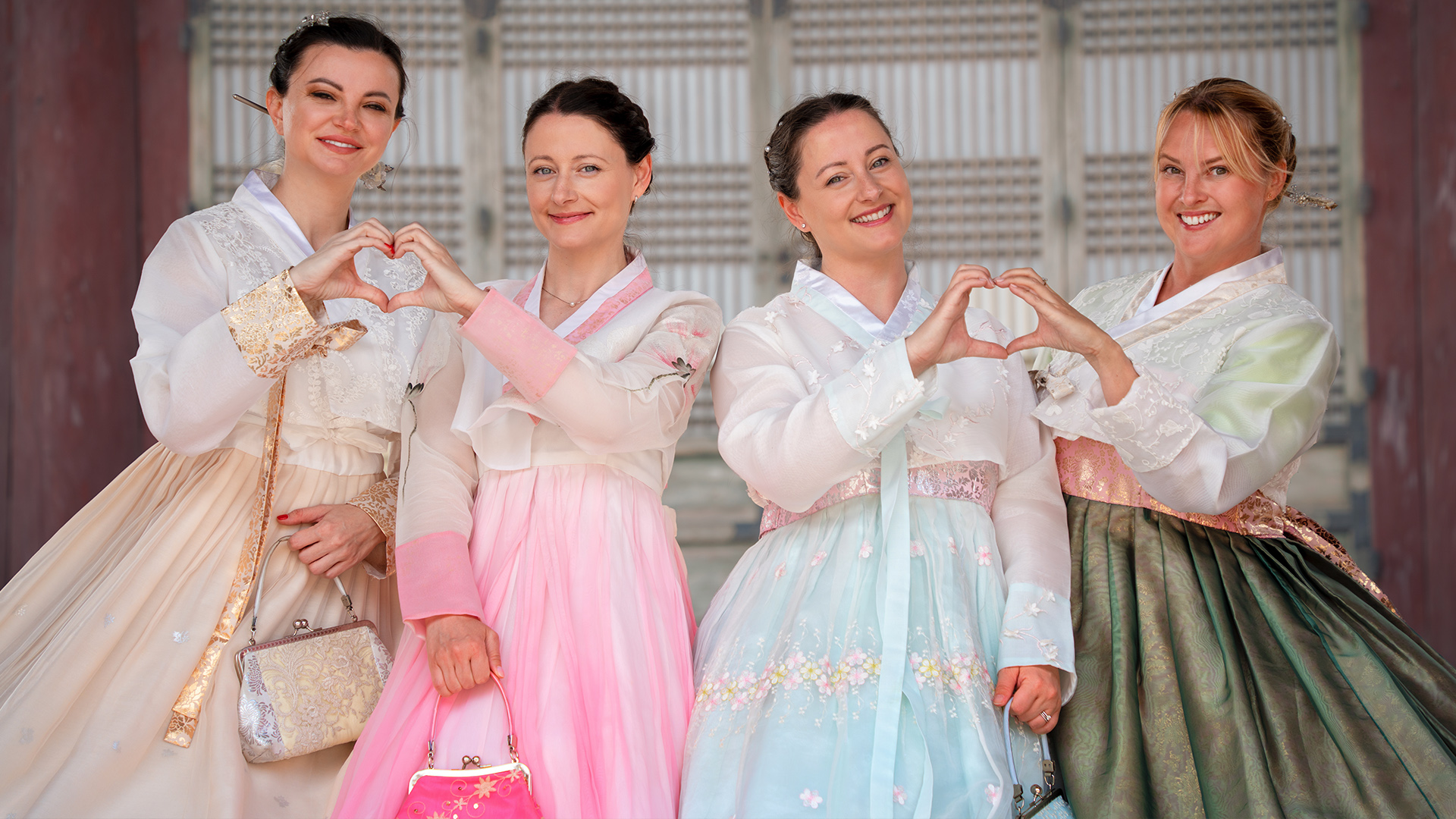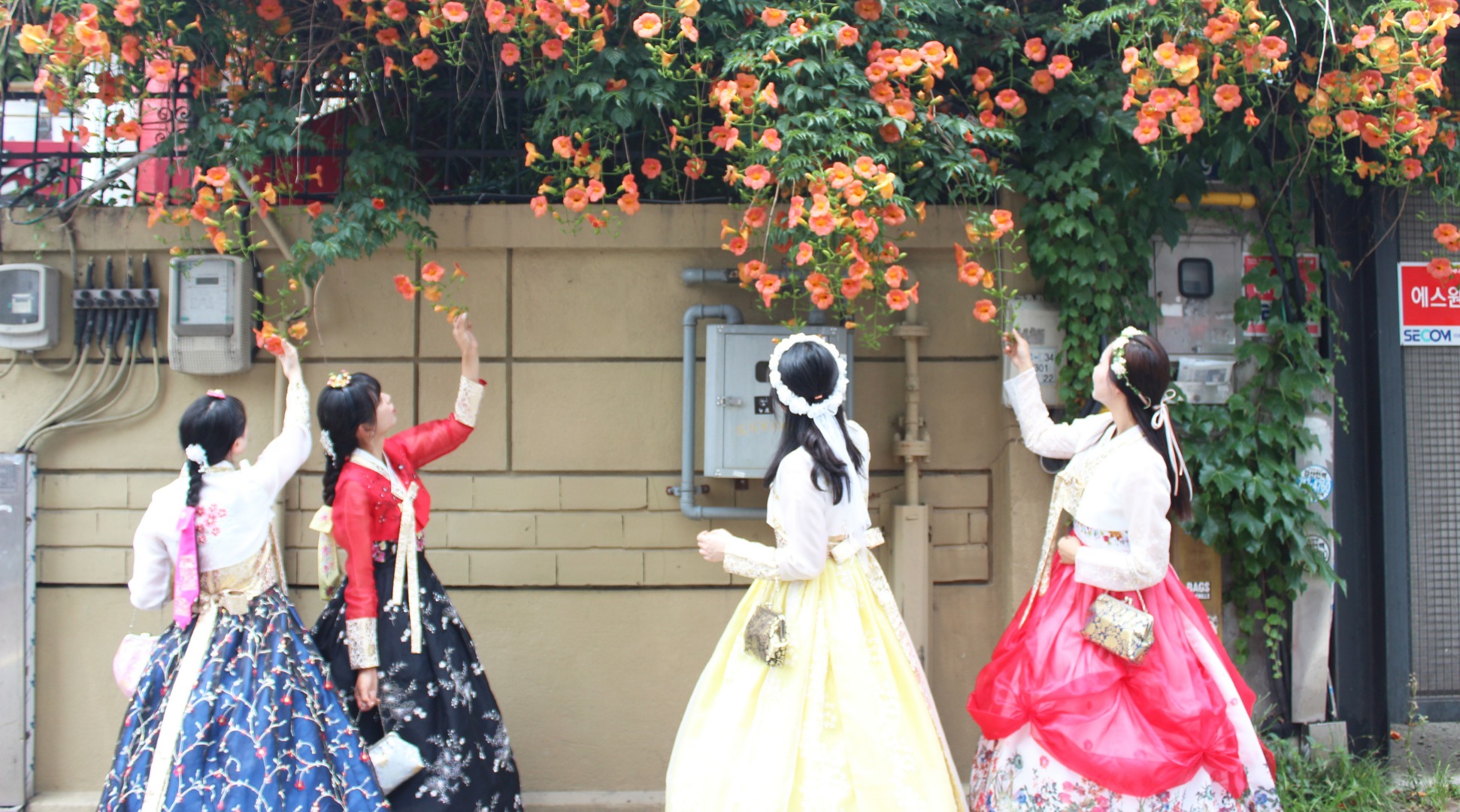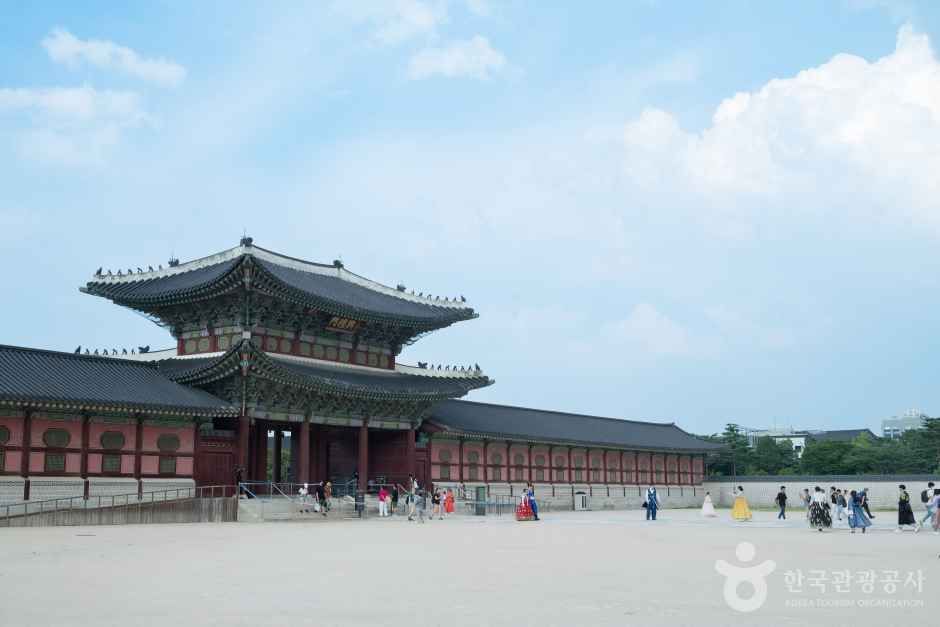
The hanbok photos filling every Gyeongbokgung courtyard are not a tour-group gimmick — they are the cheapest good idea in Seoul. A rental starts around USD 5 at the shops by the palace, and a proper hanbok walks you through the palace gate free, because the Royal Palaces and Tombs Center says so in writing: the point of the policy is popularizing hanbok, so it applies “regardless of nationality.”
The palace ticket it replaces costs 3,000 won, so the economics are not the story. The story is that for a coffee’s worth of money you get the outfit, the photos, and the small ceremony of being waved through the gate.
The rule, exactly as written
The free-admission guideline is specific, and rental shops build their sets around it. To qualify you need the top — 저고리 (jeogori, the short jacket) — and a bottom, either the full skirt or the pants, with the wrap-over collar worn properly. The guideline names its own failures: a jeogori over jeans does not count, a t-shirt with a hanbok skirt does not count, and the 두루마기 (durumagi, the long overcoat) worn alone does not count.
None of this matters if you rent a normal set — every shop’s default outfit passes. It matters if you improvise half an outfit, or rent a heavily fused costume; if the look drifts far from the traditional silhouette, the gate can say no.
The policy covers the places you would actually go: Gyeongbokgung, Changdeokgung, Deoksugung, Changgyeonggung, Jongmyo shrine and the royal tombs. Each palace keeps one weekly closing day — Gyeongbokgung rests on Tuesdays — so check the calendar before booking a rental slot.
Where the shops are, and what the money buys
The Gyeongbokgung–Bukchon cluster is the centre of gravity: dozens of shops within a few minutes of the gate. The biggest, Hanboknam’s Gyeongbokgung branch, runs four floors with more than a thousand garments and an attached photo studio, open 9:00 to 19:00 by its official listing. In the current catalogue the entry price is startling — basic rentals from about USD 5, and USD 6–11 buys the package with Korean hair styling or an in-house shoot. Smaller clusters sit by Changdeokgung and in Myeongdong, and if your trip includes Jeonju, the hanok village there has an equally developed scene at the same prices.
Two practical notes from how the shops actually run: sizes and designs thin out on weekend middays, so go early or reserve online; and winter exists — the rental is a photo outfit, not insulation, which is why the courtyards fill with hanbok over puffer-jacket sleeves every January.
The night version
If your dates overlap it, aim the outfit at Gyeongbokgung’s night opening — autumn 2026 runs 2 September to 2 October, dark palace, lit halls, closed Mondays and Tuesdays. Entry is capped at 3,300 a night and pre-sold, but 300 tickets per night are held for foreigners, sold same-day at the Gwanghwamun ticket office, passport in hand, two per person. Hanbok at the night opening is the single best photo run the city offers, and the same free-entry rule question does not even arise — you will want to be there either way.
For how a hanbok day fits into a first Seoul visit, the 2–3 day itinerary slots it into a Bukchon morning.
The free-admission criteria are quoted from the Royal Palaces and Tombs Center’s official guideline; night-opening dates and the foreigner ticket allocation are from this season’s official announcements; rental prices are the Klook catalogue’s, all checked 7 September 2026. The night-opening details change each season — the spring and autumn sessions are announced a few weeks ahead.